The Wrong Security Label Can Leave Your Product Exposed
A customer picks up your product from a shelf. The packaging looks original. The logo looks correct. The seal looks untouched.
But here is the real question.
Can they actually trust what is inside?
That is the challenge manufacturers face today. Counterfeiting, refilling, product diversion, duplicate packaging, and warranty fraud are no longer limited to luxury products. They affect FMCG, pharma, cosmetics, electronics, automotive, agro products, liquor, and industrial goods.
This is why many brands now work with professional security label manufacturers to add visible, physical, and digital protection layers to their packaging.
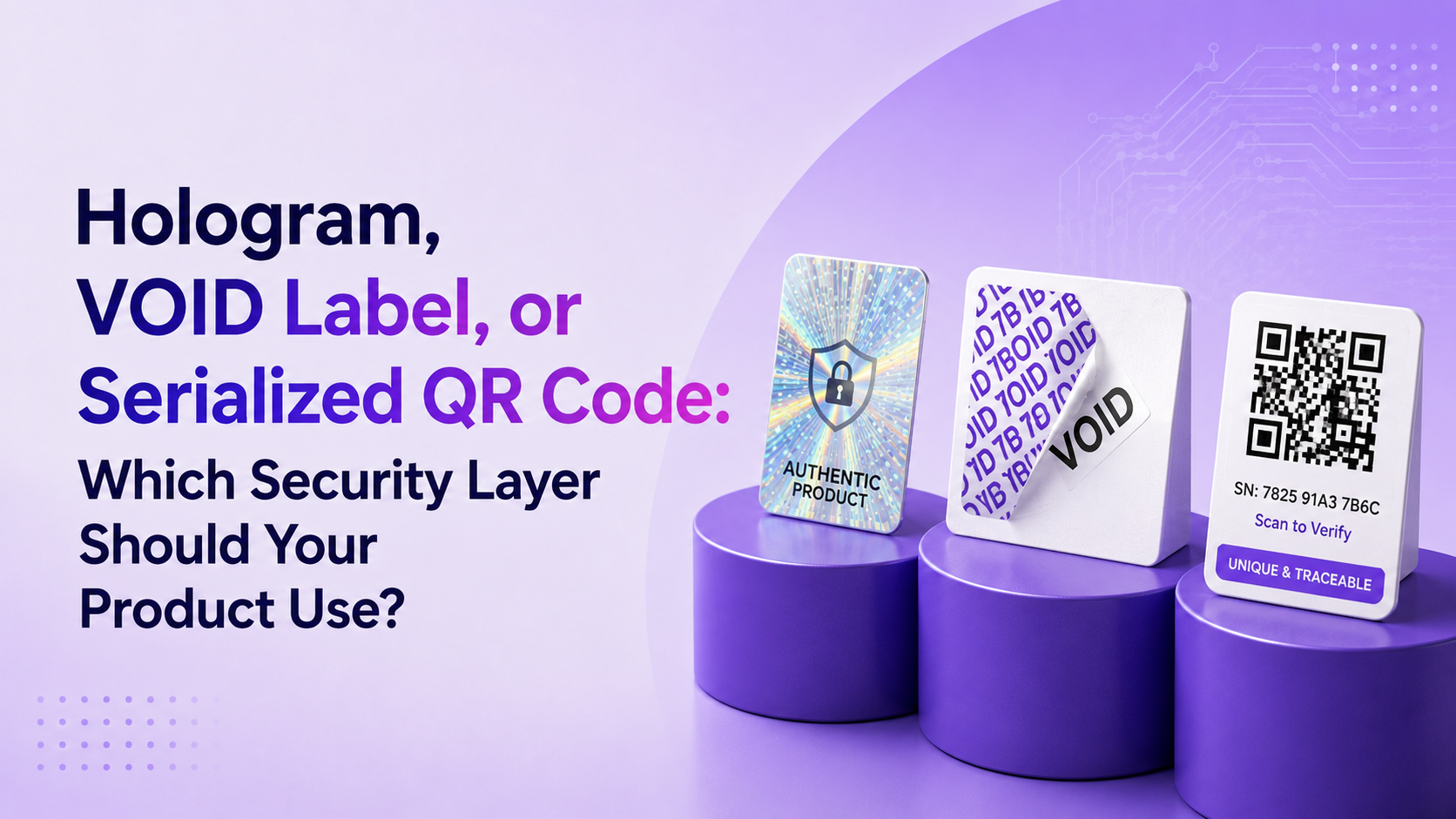
But which layer is right for your product? A hologram? A VOID label? A serialized QR code? Or a combination of all three?
Let us break it down clearly.
Why Product Security Labels Matter
Product security is not only about stopping fake goods. It is about protecting customer trust, channel control, warranty claims, and brand reputation.
A weak label can be copied. A loose seal can be removed. A basic QR code can be duplicated. A shiny hologram can still fail if it has no unique security logic behind it.
That is why modern product protection needs a layered approach. The goal is not just to make the product look secure. The goal is to make duplication difficult, tampering visible, and verification simple.
Experienced security label manufacturers help brands choose the right security layer based on product risk, surface material, distribution channel, and buyer behavior.
What Each Security Layer Actually Does
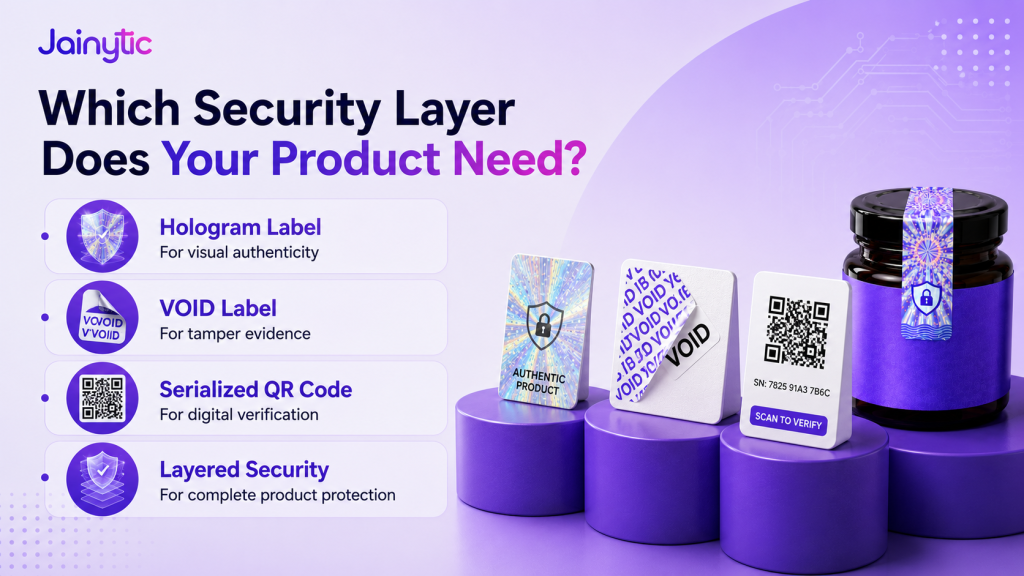
Hologram labels create instant visual authentication. They help customers, retailers, and distributors identify whether a product looks genuine at first glance.
VOID labels create tamper evidence. When someone tries to remove the label, it leaves a visible VOID message, residue pattern, or damaged surface.
Serialized QR codes create digital verification. Each product gets a unique code that can be scanned, tracked, and authenticated through a database or brand system.
Each option solves a different problem. The smart decision starts with understanding what you are trying to prevent.
Hologram Label vs VOID Label vs Serialized QR Code
| Security Layer | Best For | Main Advantage | Main Limitation |
| Hologram Label | Visual authentication | Premium look and quick trust signal | Can be copied if generic |
| VOID Label | Tamper evidence | Shows opening or removal clearly | Does not verify originality digitally |
| Serialized QR Code | Digital verification | Enables track and trace authentication | Needs secure backend logic |
1. Hologram Labels: When Your Product Needs Visual Trust
A hologram label is one of the most recognizable product security layers. Its reflective, multi angle design gives products a premium and authentic appearance, while making ordinary print duplication harder.
Holograms work well when customers or retailers need a quick visual sign of originality. They are commonly used on pharma packs, cosmetics, liquor bottles, electronics, certificates, automotive parts, and FMCG products.
Advantages:
Hologram labels build instant shelf trust, improve premium perception, and make brand copying more difficult when custom artwork, micro text, numbering, tamper features, or unique optical effects are added.
Disadvantages:
A basic hologram is not enough for high-risk products. If the design is generic, counterfeiters may imitate the look. Holograms also depend on visual inspection, so the user must know what to check.
Best Use Case:
Use hologram labels when your product needs visible authentication, premium shelf presence, or brand protection at the retail level. For stronger results, work with reliable hologram label manufacturers who can customize the design instead of using standard patterns.
2. VOID Labels: When You Need Proof of Tampering
A VOID label is designed to reveal interference. Once someone tries to peel it off, the label leaves a visible VOID message, breaks apart, or creates a residue pattern that cannot be hidden easily.
VOID labels are useful for electronics, warranty seals, pharma cartons, appliance parts, automotive components, logistics packages, documents, and high value goods where opening or replacement must be visible.
Advantages:
They provide clear physical evidence, discourage unauthorized opening, support warranty protection, and make it difficult to remove and reuse the same label on another product.
Disadvantages:
VOID labels do not prove that the product itself is original. They mainly prove whether the package or seal was disturbed. They also need the right adhesive for the surface, because glass, metal, carton, HDPE, and textured plastic behave differently.
Best Use Case:
Use VOID labels when the main risk is tampering, refilling, warranty fraud, or unauthorized access. Good security label manufacturers can help select full transfer, partial transfer, no residue, destructible, or customized VOID patterns for your packaging surface.
3. Serialized QR Codes: When You Need Digital Authentication
A serialized QR code gives every product a unique digital identity. Instead of one common printed code for all packs, each label carries a different code that connects to a verification system, batch record, warranty database, or supply chain dashboard.
This makes serialized QR codes useful for brands that need product authentication, customer engagement, distributor tracking, loyalty programs, warranty activation, or anti diversion monitoring.
Advantages:
They allow real time verification, scan tracking, duplicate scan detection, batch movement visibility, and customer interaction. A QR code can also connect buyers to product information, offers, registration forms, or feedback pages.
Disadvantages:
A QR code is only as strong as the system behind it. If the same code can be copied and scanned repeatedly without alerts, it becomes weak. Serialized QR codes need secure printing, database logic, duplicate scan detection, and clear customer instructions.
Best Use Case:
Use serialized QR codes when your product needs digital traceability, customer verification, or supply chain visibility. They work best when combined with a physical security feature such as a hologram or tamper evident label.
Which Security Layer Should Your Product Use?
Choose a hologram label if your biggest concern is visual counterfeiting and retail trust. This suits cosmetics, liquor, pharma, FMCG, automotive parts, and branded merchandise.
Choose a VOID label if your biggest concern is seal breakage, refilling, unauthorized repair, or warranty misuse. This suits electronics, industrial products, pharma cartons, logistics packages, and sealed containers.
Choose a serialized QR code if your biggest concern is track and trace, duplicate detection, customer verification, or distributor accountability. This suit regulated products, high value goods, warranty products, and products sold across multiple channels.
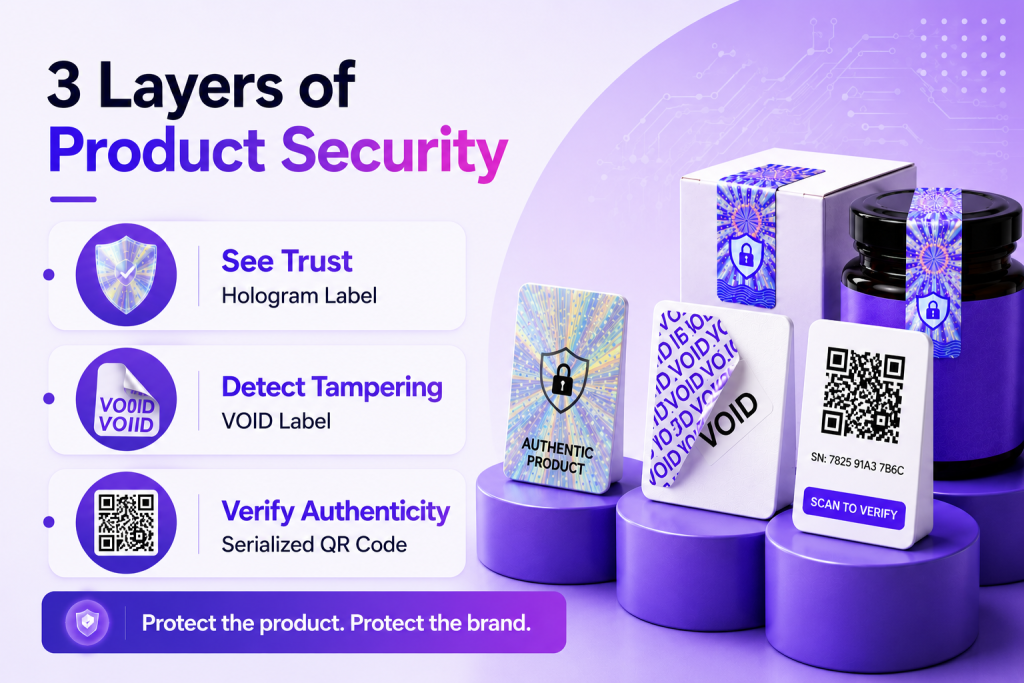
Choose a layered solution if your product faces more than one risk. For example, a pharma product may need a hologram for visual trust, a VOID seal for tamper evidence, and a serialized QR code for digital verification.
This layered approach is often recommended by experienced security label manufacturers because no single label can solve every security challenge alone.
The Smartest Approach Is Layered Product Security
Think of product security like a lock system.
A hologram is the visible trust mark. It tells the buyer that the product carries a recognizable security feature.
A VOID label is the tamper signal. It tells the buyer whether the package was opened or disturbed.
A serialized QR code is the digital check. It tells the brand whether that product identity exists, where it was scanned, and whether the same code is being misused.
When these layers work together, the product becomes harder to copy, refill, or manipulate. It also gives the brand better control over the supply chain.
How Jainytic Helps Brands Choose the Right Security Label
Jainytic works with brands that need packaging and label solutions designed for real product protection, not just surface level decoration.
As packaging risks become more complex, brands need security label manufacturers who understand materials, adhesives, printing, serialization, application surfaces, and industry use cases.
Jainytic helps businesses choose and customize security labels based on product category, packaging material, supply chain risk, and brand identity.
Whether you need hologram labels, VOID labels, tamper proof labels, serialized QR codes, or a layered solution, Jainytic can help create a practical security label system for your product.
For brands comparing hologram label manufacturers, the right partner is not the one who only prints a shiny label. The right partner helps build a label that supports authentication, tamper evidence, and customer trust.
Final Thoughts: Security Should Match the Risk
A low-risk product may only need a basic tamper evident label. A high visibility retail product may need a hologram. A product moving through multiple distributors may need serialization. A product exposed to duplication, refilling, and warranty fraud may need all three.
The goal is simple: choose the security layer that matches the risk.
Hologram labels help people see trust. VOID labels help people detect tampering. Serialized QR codes help brands verify and track authenticity.
When used correctly, these layers protect more than packaging. They protect the brand, the customer, and the supply chain.
If you are not sure which security layer your product needs, Jainytic can help you evaluate the right option and build a label system that works from production to purchase.
Frequently Asked Questions
The best security label depends on the product risk. Hologram labels are useful for visual authentication, VOID labels are useful for tamper evidence, and serialized QR codes are useful for digital verification. Many brands use a combination of these layers for stronger protection.
Hologram labels can make counterfeiting harder and improve customer trust, but a basic hologram alone may not be enough for high-risk products. Stronger protection comes from custom hologram design, numbering, tamper features, and digital authentication.
A VOID label is a type of tamper evident label that leaves a visible message or pattern when removed. Tamper proof labels can also include destructible labels, security seals, and other materials designed to show interference.
Serialized QR codes give each product a unique identity. This helps brands verify authenticity, track scans, detect duplicate codes, support warranty registration, and connect directly with customers after purchase.
Choose a manufacturer that understands your product surface, industry risk, adhesive requirements, printing quality, serialization needs, and customization options. The right partner recommends the right security layer instead of selling one standard label for every product.