
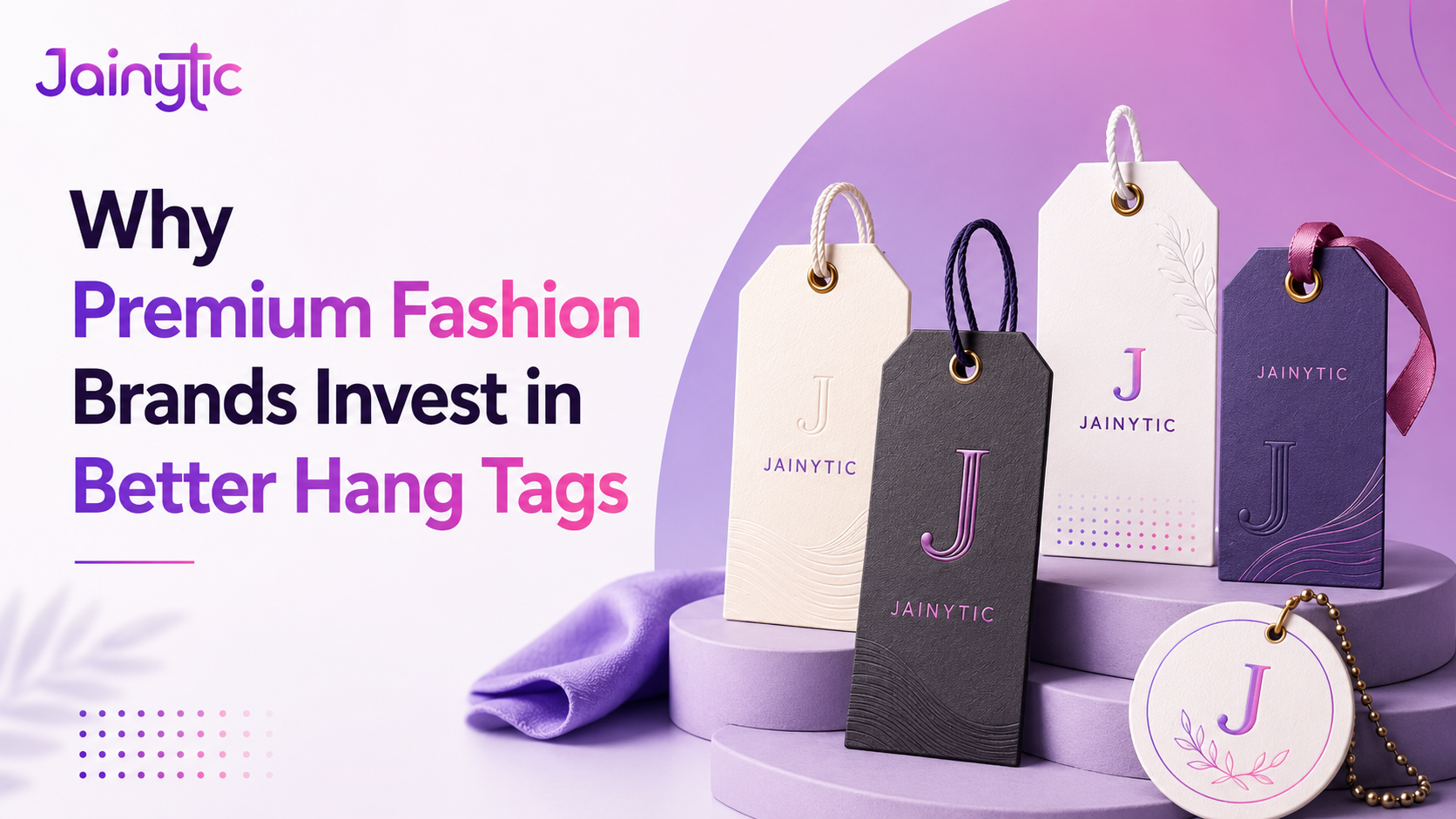
The right hang tag is not just a place for a price or size. It is one of the first details that tells a customer whether a fashion product truly feels premium.
The Small Detail That Decides Perceived Value
A customer picks up a garment, notices the fabric and stitching, and then reaches for the tag.
Does it feel as refined as the clothing?
That moment matters. A beautifully made garment can lose perceived value when it is paired with a thin, poorly printed, or generic tag. A thoughtful tag can make the product feel complete before trial.
This is why premium fashion brands use hang tags to communicate quality, explain the product, reinforce identity, and support the price customers are being asked to pay.
The tag may be removed after purchase, but the impression it creates can remain.
The Real Question Is Not Whether the Tag Looks Expensive
Many apparel businesses begin by asking which paper, foil, colour, or shape will make a tag look luxurious.
That is not the best starting point.
A textured tag, foil logo, folded format, or QR code can each serve a different purpose.
So, the better question is simple:
What should the customer understand or feel when they hold the garment?
Should the tag communicate craftsmanship, sustainability, exclusivity, heritage, or authenticity? Once that purpose is clear, it becomes easier to select the right material, printing method, finish, shape, and attachment.
The best premium hang tags for clothing support the brand position and the value of the garment.
What Are Premium Hang Tags for Clothing?
Premium hang tags for clothing are customized tags attached to garments, accessories, or textile products. They may include a logo, size, price, barcode, fabric details, care guidance, collection information, QR code, or brand message.
What makes them premium is the way these elements work together.
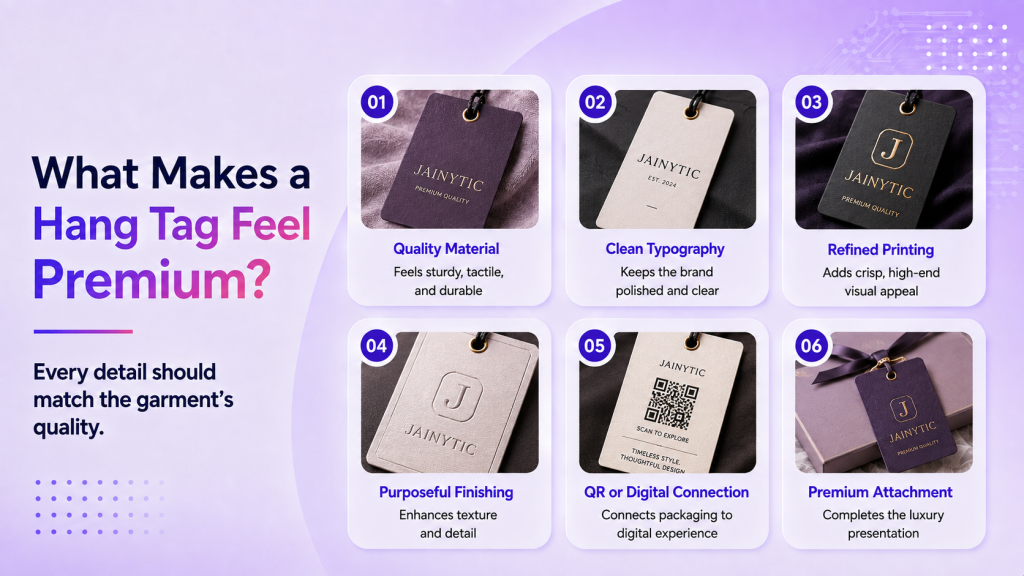
Material, print clarity, typography, finishing, and attachment quality all influence the result.
A normal hang tag gives information. A premium hang tag gives information while strengthening product presentation.
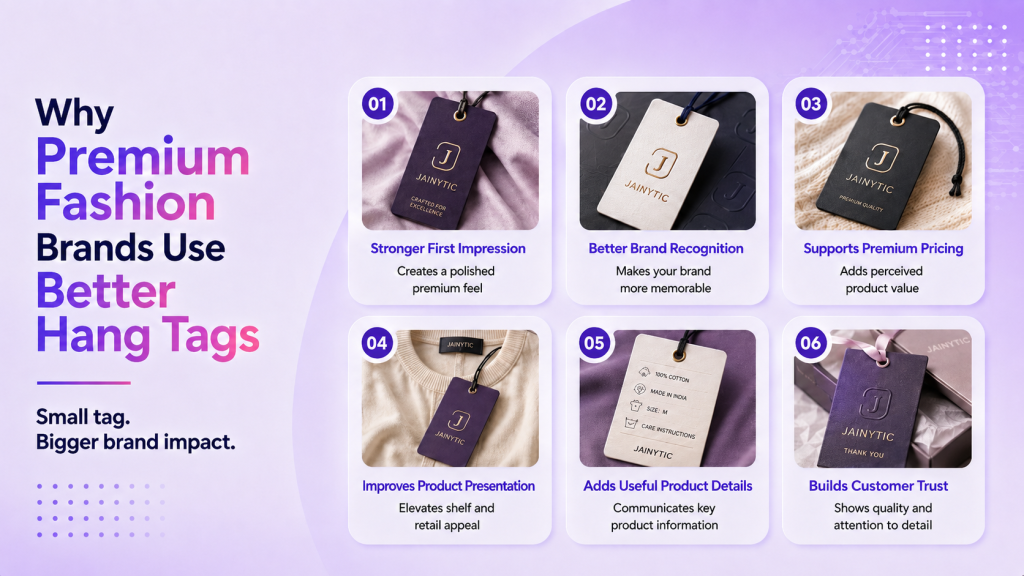
1. They Create a Strong First Impression
Customers make quick judgments in stores, exhibitions, and unboxing experiences. The hang tag is one of the visible and tactile signals they use.
When it feels weak, faded, crowded, or inconsistent with the clothing, the product can appear less considered. When it uses suitable material, clean printing, and a balanced layout, the brand appears more professional.
2. They Reinforce Brand Identity
Premium brands are remembered through consistency. Logos, colours, typography, packaging, labels, and store presentation should feel connected.
Premium hang tags for clothing carry that visual identity directly onto every garment.
A minimalist label may use uncoated stock, an occasion-wear brand may choose metallic foiling, and a streetwear label may use bold graphics or unusual shapes.
The goal is not to add every finish. It is to make the tag instantly feel like it belongs to the brand.
3. They Explain Why the Garment Costs More
A customer may see a higher price without understanding the work behind it.
The tag can provide context.
It can mention handcrafted details, limited production, premium fabric, responsible sourcing, special dyeing, artisan work, technical performance, or local manufacturing. This helps customers connect the selling price with the product story.
Use premium hang tags for clothing when the garment contains value that is not obvious from appearance alone.
Claims should remain specific. Words such as “exclusive” or “luxury” are less convincing when the tag does not explain what makes the product different.
4. They Improve the Customer Experience
Customers want useful information without having to search for it.
A well-organized tag can make size, price, fabric, care, fit, product code, and collection details easy to find. It can also help store staff identify products and reduce confusion.
Premium does not mean adding more content. It means presenting the right content clearly.
If information is extensive, a folded tag or QR-linked page can keep the design readable.
5. They Connect Products With Digital Experiences
A hang tag can do more than carry printed information.
A managed QR code can direct customers to care instructions, styling ideas, authenticity checks, collection stories, or sustainability information.
This allows the physical tag to remain clean while giving interested customers more detail.
Use premium hang tags for clothing with QR codes when the brand wants to continue the customer journey beyond the store.
The link should open quickly, work on mobile, and lead to a relevant brand-owned page.
6. They Can Support Authenticity
Premium products may face duplication, unauthorized resale, tag transfer, and grey-market distribution.
Brands can add serial numbers, variable QR codes, holographic elements, special printing, or controlled verification links. These features support product identification and customer verification.
Use premium hang tags for clothing with security features when imitation or unauthorized movement is a concern.
A removable tag should be combined with permanent garment labels, packaging security, or a secure digital system when the risk is high.
Basic Hang Tags vs Premium Hang Tags
| Feature | Basic Hang Tags | Premium Hang Tags |
| Material | Standard lightweight stock | Thick, textured, recycled, or speciality stock |
| Printing | Basic logo and details | Accurate colours and refined graphics |
| Design | Generic layout | Custom brand-led layout |
| Finishing | Little or no finishing | Foiling, embossing, coating, lamination, or die cutting |
| Information | Size, price, and barcode | Product story, care, QR code, and collection details |
| Attachment | Standard fastener | Thread, cord, ribbon, seal, or custom attachment |
| Brand impact | Functional | Stronger value and brand perception |
Which Premium Hang Tag Should You Use?
Here is the simplest way to decide.
If your brand is minimal, use a clean layout with high-quality uncoated or textured stock. If the collection is luxurious, consider foiling, embossing, layered construction, or refined ribbon attachments. If the garment needs more explanation, use a folded tag. If customers need digital information, add a tested QR code. If authenticity is important, use serialization or security features.
The strongest solution is the one that matches the garment, price point, audience, and selling environment.
Good premium hang tags for clothing feel intentional. They do not look like generic tags with expensive finishes added at the end.
Where Different Fashion Categories Use Better Hang Tags
Luxury labels use them to communicate craftsmanship and exclusivity. Sustainable brands explain materials, sourcing, and care. Streetwear brands use bold graphics, numbering, and QR-led experiences. Bridal brands use textured materials and refined finishing. Sportswear brands explain performance features. Kidswear brands focus on sizing and care clarity.
The design changes by category, but the purpose remains the same: help the product feel credible, complete, and aligned with the brand.
How Jainytic Helps Fashion Brands Create Better Hang Tags
At Jainytic, hang tags are planned around the garment category, brand positioning, required information, retail environment, and production needs.
As a packaging and label manufacturer in Delhi NCR, Jainytic supports fashion businesses with customized sizes, shapes, materials, printing, finishing, variable information, QR code integration, and attachment options.
The process begins with practical questions. Is the product sold in stores or online? Will the tag carry a barcode, care details, or product story? Does the brand need different versions, a digital link, or a security feature?
Based on these requirements, Jainytic develops premium hang tags for clothing that balance appearance, readability, durability, production efficiency, and cost.
Final Thoughts: Better Garments Deserve Better Tags
A hang tag is small, temporary, and easy to underestimate. Yet it can influence how customers judge a product before purchase.
Choosing premium hang tags for clothing is not about making every tag heavy, shiny, or complicated. The goal is to make it appropriate.
Material should match the positioning. Printing should protect brand consistency. Information should be easy to understand. Finishing should have a purpose. The attachment should suit the garment.
If a garment has been designed with care, the tag attached to it should communicate the same standard.
Frequently Asked Questions
What are premium hang tags for clothing?
Premium hang tags for clothing are customized garment tags made with carefully selected materials, printing, finishes, shapes, and attachments. They communicate product information while reinforcing brand quality and positioning.
Why do luxury fashion brands use better hang tags?
They use better hang tags to create stronger first impressions, explain craftsmanship, support premium pricing, improve presentation, and deliver a consistent customer experience.
Which material is best for premium clothing hang tags?
The right material depends on the garment and brand identity. Common choices include thick paperboard, textured stock, recycled paper, coated stock, and speciality materials.
Can hang tags include QR codes?
Yes. QR codes can connect customers to care instructions, styling content, authenticity checks, registration, collection stories, or sustainability information.
Which finishes make hang tags look premium?
Foil stamping, embossing, debossing, spot coating, lamination, textured surfaces, die cutting, and layered construction can create a premium effect.
Why choose Jainytic for clothing hang tags?
Jainytic helps fashion brands select suitable materials, sizes, shapes, printing methods, finishes, variable information, QR codes, and attachments based on the garment category, retail use, and production requirements.